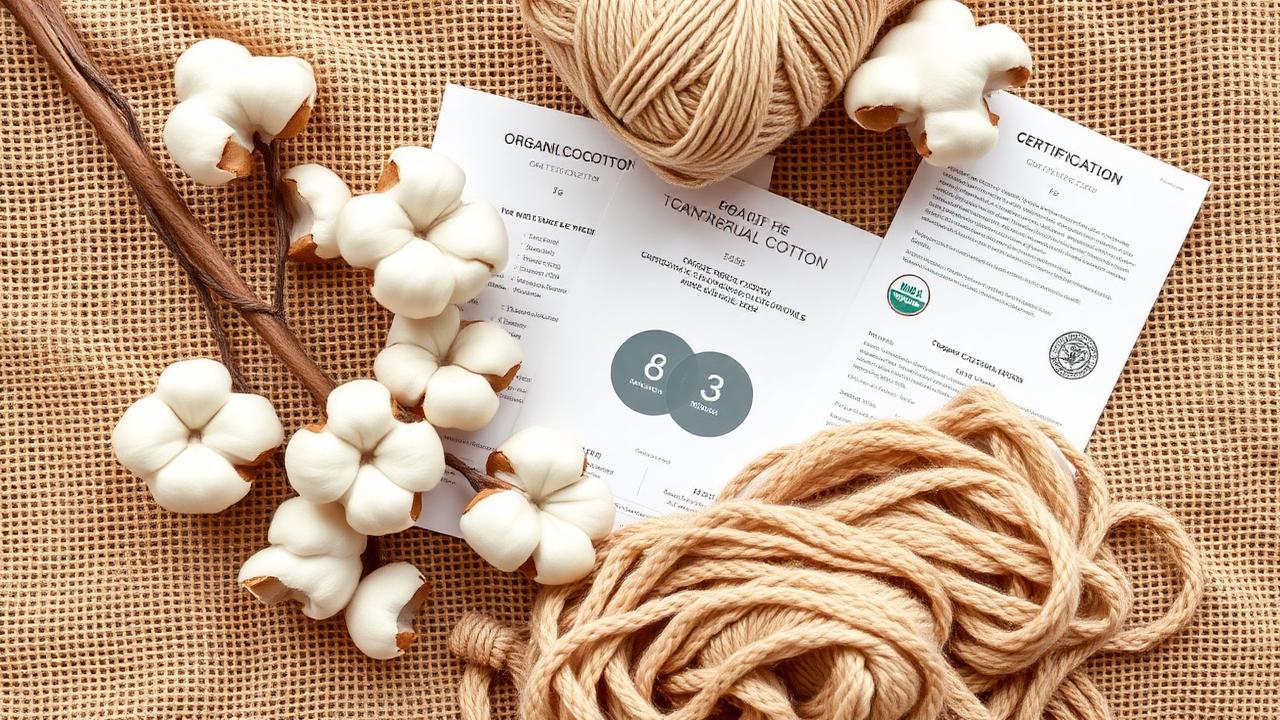
GOTS Certification in India: A Practical Guide for Textile Brands
GOTS — the Global Organic Textile Standard — is one of the most recognised certifications in the textile world. India is one of its largest hubs, with thousands of facilities certified across spinning, weaving, dyeing, and garment production.
If you are a brand sourcing from India, or an Indian manufacturer selling into Europe, GOTS often comes up early in the conversation.
This is a practical, no-jargon guide to what GOTS actually involves, who needs it, and how it fits alongside newer frameworks like the digital product passport.
What is GOTS?
The Global Organic Textile Standard is a voluntary certification covering textiles made from organic fibers.
It sets requirements across two main areas:
- Environmental criteria — organic fiber content, chemical inputs, water and energy use, wastewater treatment
- Social criteria — fair labour conditions, no forced or child labour, freedom of association
Certification is granted by independent, approved certification bodies — not by GOTS itself.
Who Needs GOTS Certification?
GOTS is relevant if:
- You produce or trade textiles made from organic fibers
- You want to label products as "organic" in regulated markets
- Your buyers — especially in Europe — require GOTS as a baseline
- You are positioning your brand around verified organic and ethical claims
It is not relevant if you do not work with organic fibers, or if your customers do not require it.
What GOTS Actually Covers
A GOTS-certified product can be traced through a certified supply chain, from raw fiber to final garment.
Key requirements include:
- Minimum 70% certified organic fibers (95% for "organic" labelling)
- Restricted use of chemical inputs (no GMOs, no toxic dyes, no chlorine bleach)
- Wastewater treatment at wet processing units
- Documented social compliance based on ILO core conventions
- Full chain-of-custody documentation
Why India is a Major GOTS Hub
India is the world's largest producer of organic cotton, and one of the largest GOTS-certified ecosystems globally.
Reasons:
- Deep organic cotton cultivation, particularly in Madhya Pradesh, Maharashtra, Odisha, and Gujarat
- A mature textile manufacturing base across spinning, weaving, and garmenting
- Strong export orientation toward EU and US buyers
For European buyers sourcing organic textiles, India is often the first stop.
The GOTS Certification Process in India
Step 1: Choose an approved certification body
Several internationally recognised bodies operate in India, including Control Union, Ecocert, and OneCert.
Step 2: Submit an application
You provide facility details, product scope, processes, and supply chain information.
Step 3: On-site inspection
An auditor visits the facility to verify processes, inputs, chemicals, wastewater handling, and social conditions.
Step 4: Review and certification
If the facility meets the standard, a GOTS scope certificate is issued.
Step 5: Transaction certificates per shipment
Each shipment of GOTS-certified material requires a separate transaction certificate — this is what proves chain of custody.
Step 6: Annual recertification
Certification is not one-and-done. Facilities are audited annually.
How Long It Takes
Typical timelines in India:
- First-time certification — 3 to 6 months, depending on facility readiness
- Annual renewal — 1 to 2 months
- Transaction certificates — issued per shipment, usually within days of request
Brands often underestimate the lead time for first-time certification.
Where GOTS Is Strong — and Where It Stops
GOTS is excellent at what it covers. It is also bounded.
Strong at:
- Organic fiber content verification
- Wet processing chemical control
- Social compliance baseline
- Chain of custody for certified material
Not designed for:
- Product-level digital records
- Consumer-facing passport views
- Full lifecycle data including end-of-life
- Non-organic supply chains
This is why GOTS and digital product passports are increasingly used together — they answer different questions.
GOTS and the EU Digital Product Passport
The EU digital product passport does not replace GOTS. It sits on top of certifications like it.
Practically:
- GOTS verifies that specific organic and social criteria are met
- The DPP provides a continuous, product-level data record that can reference those certifications
For Indian textile exporters, the smart approach is to maintain GOTS where it makes sense, and build DPP-ready data alongside it.
Common Misconceptions
"GOTS-certified means the brand is certified."
It does not. Certification applies to facilities and products, not brands.
"One certificate covers all shipments."
It does not. Each shipment of certified material needs a transaction certificate.
"GOTS is enough for EU compliance."
It is a strong building block, but it does not satisfy upcoming DPP requirements on its own.
How Tracetex Fits With GOTS-Certified Supply Chains
Tracetex is built for the textile and handloom value chain. For GOTS-certified producers, it adds:
- Product-level identity beyond facility-level certificates
- A structured digital record that references existing certifications
- A multilingual passport view designed for European buyers
- Alignment with emerging EU DPP data requirements
The certificate proves the standard was met. The DPP makes that proof travel with the product.
The Bottom Line
GOTS remains one of the strongest verifications in the organic textile world, and India remains one of its most important hubs.
For Indian producers and global brands sourcing from India, the path forward is not GOTS or DPP. It is GOTS and DPP — certifications for what they verify well, and digital product passports for the continuous, product-level story the market is now asking for.
DPP software for manufacturers
Get EU Digital Product Passport ready with traceability built for exporters.
DPP software for manufacturersWant to learn more about Tracetex?
Discover how we bring traceability to the textile supply chain.
Get in Touch